
Homeland Transportation driver Samira “Sam” Rosario: Helping residents find happiness

test

Homeland Transportation employee, Sam Rosario

Not long ago, Samira Rosario — “Sam’’ as she’s known to everyone — was driving a resident to a doctor’s appointment.

“Sam,” the resident said. “I’m dying for some French fries. Can you please take me to McDonald’s?”

Sam called Homeland’s dietary department and got the okay. Off they went to the drive-through.

“Her face was everything,” Sam says. “It was like you gave a little kid some candy.”

Sam is a familiar face to Homeland residents and staff. She drives residents to appointments and family visits, but as the French fries excursion demonstrates, she’s a friendly helper, too.

“It’s the little things you can do for them that make them happy,” she says. “It’s not about you. It’s about them. It’s about other people.”

When she was in high school, Sam came to Homeland, getting her CNA certification through Harrisburg School District’s former vocational training program. That was almost 15 years ago.

“At first, I didn’t have an idea of what a nursing home was,’’ she says. “I thought it was a regular job. As time passed, it became another home.”

Sam’s path to Harrisburg is marked by perseverance and a national tragedy. Her mother moved to the mainland U.S. from Puerto Rico, followed by Sam’s father a year later. Sam and her brother landed in New York on her brother’s birthday – Sept. 11, 2001, the day of the 9/11 attacks.

“When we left New York, everything was shut down,” she says. “It was so crazy. Our uncle picked us up. It was a scary situation.”

Sam is the second of 10 children, including eight boys. Her mother had health conditions that required extended hospital stays, so Sam learned to care for her younger siblings.

“I used to cook for them and help them with homework,” she says. “My mom says she feels sorry now because she pushed me to grow up too fast, but my mom is an only child. She didn’t have much help over there.”

That immersion into adult-style responsibility helped her develop an independent streak. She moved out on her own at age 19 – still working at Homeland.

She served as a CNA for about six years until Homeland offered the transportation position. She was scared about taking on new responsibilities, but it was an opportunity to grow her relationship with residents and hear their stories.

“Homeland gives you a lot of chances to grow up in different areas,’’ she says. “I always tell my family, ‘That’s my other family.’”

Sam has learned the organizational skills needed to manage ever-changing responsibilities. She has the independence to plan each day and respond to occasional emergencies.

In the past three years, Sam has been on a family journey of her own. She once teased friends about looking for love online, but her work and travel schedule kept her busy. Her sister convinced her to try online dating, and she met Victor Rosario. In six months, they were married. She believes that God brought them together.

“I feel like I was going too fast, but things just got in place so fast. I just felt this is it. He’s the one.”

Sam and Victor welcomed their daughter, Mia, in September.

“Victor loves being a dad,’’ she says. “He helps me a lot. A lot, a lot, a lot.”

The family enjoys attending church at New Generation Ministry. Victor serves on the worship team, playing guitar for services. Sam, always nurturing, is a youth leader, helping young families find their spiritual footing.

Sam appreciates the support she gets as a teammate of Homeland Transportation Coordinator Michael Quinones.

“We have a great relationship,” she says. “When I need something, he helps me out. He’s been doing this for more years than me. We like to make the residents happy.”

It all adds up to her joy at making Homeland her second home.

“Loving what you do – nothing else is wrong,” she says. “When you love your job and love what you do, everything is easy.”

Homeland’s Fifth-Annual “Lottery” Calendar: A Gift of compassion and prizes!

test

A Homeland tradition returns! The Fifth Annual Homeland “Lottery” Calendar is now available and ready for your holiday shopping list.

The calendar is a gift that keeps on giving because everyone who purchases a calendar automatically is entered into daily drawings for cash prizes of up to $100.

Additionally, your $25 calendar purchase helps Homeland provide financial support and additional services to so many of our residents, patients and clients. Over the past five years, our annual calendar has raised more than $40,000 for Homeland’s benevolent care.

“My husband gives one to everyone who works for him,” says Homeland Board of Trustees member Carlyn Chulick. “One man has won nine times. It’s a great gift for all those people you give a little something to when you want to say you’re thinking of them during the holidays.”

The 2021 calendar spotlights the complete continuum of care that Homeland Center and Homeland at Home provide for patients and families’ changing circumstances.

Homeland Center, founded in 1867, is the region’s premier continuing care facility for those needing personal care, skilled nursing care, and rehabilitation. The Ellenberger Unit provides a supportive environment for those suffering from memory impairment or dementia.

Homeland at Home supports living independently, at-home recovery through physician-ordered care, and compassionate hospice care so patients and families can make the most of every precious moment together.

Homeland’s calendar marks the seasons with beautiful images of mighty oaks in keeping with the fifth anniversary traditional gift of wood. Each tree is carved with “Homeland 1867” inside a heart, representing the deep and caring roots that Homeland has planted in Central Pennsylvania.
“Oak trees represent a solid, long, and strong foundation,’’ Carlyn says. “Just like Homeland Center’s more than 150-years of supporting our community.’’

These calendars are available now, so don’t delay! To order your calendar, contact the Homeland Center development office at (717) 221-7885 or visit https://homelandcalendar.fasttransact.net/ (sold out)


Virtual visits go to next level with new technology

test

The glowing emails from family members on Homeland Center’s virtual visits include thumbs-up and heart emojis:

“We appreciate all your efforts and everyone at Homeland to keep us connected during this difficult time!”
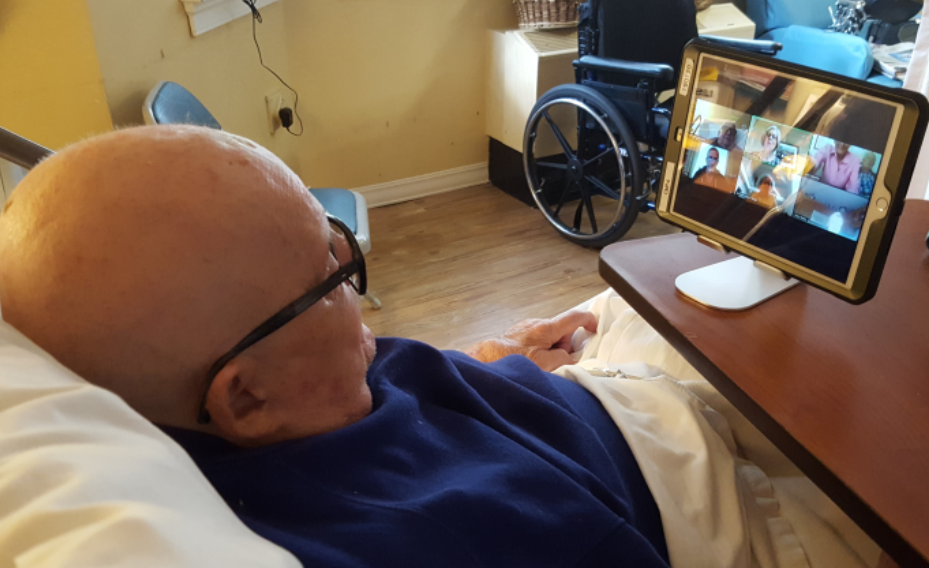
“Our family really appreciates everything Homeland is doing to keep us connected to our mom.”

“We all want to be in the same room as him and hug him- as I’m sure everyone who has a loved one at Homeland does. So happy we at least have Zoom for now.”

“He really enjoys these Zoom meetings, and it is so very important to his feeling connected to us! Thank you!!!”

Since Homeland restricted visitors in all but end-of-life situations to help contain the spread of COVID-19, a dedicated team has worked hard to connect residents to loved ones via Zoom, Facetime, Skype and traditional phonecalls.

The visits bring residents up-to-date on family news or in virtual attendance to grandchildren’s weddings.

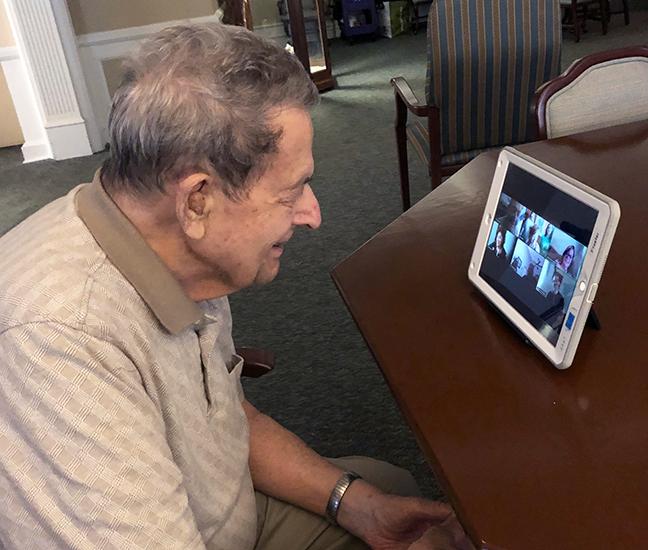
Resident Bob Hostetter and longtime Rotary Club of Harrisburg member joins the club’s weekly meetings via Zoom. On Thursdays, he visits family members and their dog and on Fridays, he discusses current affairs with old friends.
“We meet every Friday, and we talk about world events and local events, politics, Harrisburg,” says Bob. “We’re still connected. We all enjoy that.”

Bob also celebrated his birthday as about 40 friends cycled in and out of a Zoom call, making virtual room for each other to extend best wishes.

“We continue to help residents participate in the life events of their families,” says Alice Kirchner, who coordinates the technology involved and supports the team of activities, social work, and development staff facilitating the calls.

Staff carefully cleans the devices between uses, Alice says. Between March and the end of 2020, Homeland expects to facilitate at least 850 Zoom calls. Total virtual contacts, including Facetime and Skype, will probably exceed well over 1,200, she says.

Recently, state-of-the-art technology and adaptable accessories purchased through a federal grant make the experience even more powerful.

In August, Homeland received a $3,000 grant from the federal U.S. Centers for Medicare & Medicaid for “adaptive communicative technologies” – shared devices and accessories allowing nursing home residents to communicate with the outside world while COVID-19 restrictions are in place.

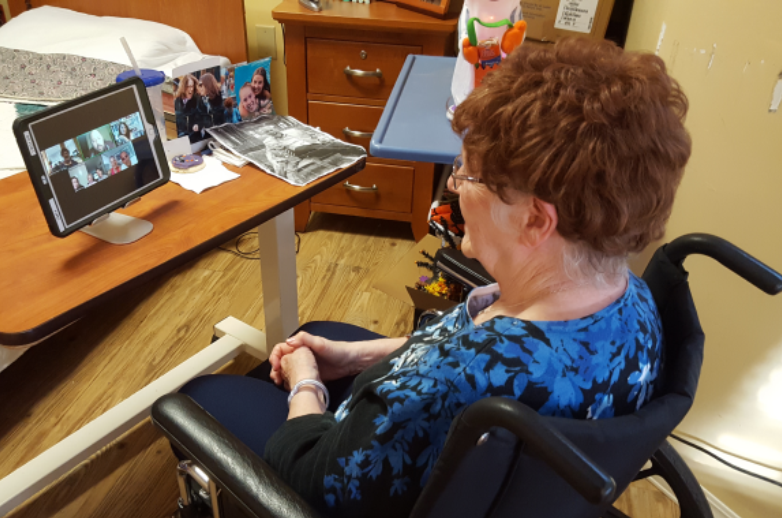
With the grant, Homeland bought six new iPads, adding current technology to a fleet of 14 devices. Homeland also bought gooseneck stands that can be attached to nightstands or wheelchairs, allowing the devices to be positioned at angles, allowing residents to see their loved ones more easily and vice versa.

“We tried to leverage this additional source of dollars to better address resident needs and make it a better experience,” says Kirchner.

Homeland’s virtual visit team is trained to use the technology, help start the virtual visits, and troubleshoot any problems. They adjust the lights and turn down televisions to create optimal conditions for the calls.

“They are so genuine and caring and conscientious,” she says of Homeland’s ‘visit’ team.

The calls are scheduled through December and are so successful that they will probably continue after restrictions lift. Naturally, families look forward to in-person visits, but that is not viable for some.

Alice says the smiles on the faces of family members and residents make it all worthwhile.

Family members deserve a lot of credit as well. “Very few calls didn’t occur as scheduled,” she says. “This is a commitment that families are willing and able to make.’’

Friendly voices, listening ears: Homeland receptionists offer a human touch

test

In the age of automation, Homeland Center puts real people at the front desk. Ask them a question, and they’ll find the answer. Stop to chat, and they’ll find the time to listen.

“One of the greatest things about having people at the desk instead of a machine is that people will ask you almost anything that’s on their mind,” said second-shift receptionist Ron Clark. “Sometimes, they’re having a bad day, and you try to uplift their spirits.”

Meet the four devoted people who staff the receptionist’s desk, watching the phones and the doors as they play their part in sustaining Homeland’s renowned homelike feel.

Ron Clark, evenings

Ron Clark has lived through a few adventures, like the time he snatched a shotgun from a man pointing it at him and future Harrisburg Police Chief Thomas Carter. In a long career, he has worked in security and law enforcement in the U.S. Marines, as a Pennsylvania state constable, and security at hospitals and in higher education.

With his keen instincts, he keeps an eye on the door, even as he befriends residents and their families.

He has grieved with families and residents who have lost loved ones. He listens to the tales of veterans. He considers time with Homeland staff “a shared gift,” as they forge bonds and develop teamwork.

“The residents, they open up to me,” Ron says. “Some of the stories they tell me are overwhelmingly enjoyable. People come from all different types of life. I love to read, but I learn more from people on the streets than I’ve ever learned from a book.”

Carol Mitchell, days

Carol Mitchell is a good listener and empathizer because she knows all about the lives that Homeland residents have lived.

“I have been everywhere these folks have been,” she says. “I’m a mom. I’ve been a single mom. Now I’m a senior citizen myself.”

Carol first worked in Homeland activities, under the supervision of her daughter, former Activities Director Gillian Sumpter. Now, getting the hang of the front desk has been “a beautiful journey.”

Carol is retired from Harrisburg’s Hamilton Health Center, where she discovered a passion for teaching women, especially women of color, the benefits of breastfeeding. She trained to become a lactation counselor and worked with Harrisburg Hospital to establish a support program for breastfeeding mothers.

At Homeland, she works “the other end of the life spectrum.” When family members call, she does her best to help.

“There’s nothing worse than saying, ‘I don’t know how your mom is,’” she says. “Nine times out of 10, we don’t know, but we can suggest they call back at a certain time to reach the nurse. At least we can give them a goal.”

Staffing the front desk shows Homeland’s commitment to personalized service, Carol believes.

“I know I feel good when I call someplace and a human answers the phone,” she says. “I can ask questions and get more than I would from a robocall. I appreciate talking to a real person, especially when it comes to my loved ones.”

Pat Wilbern, nights

Pat Wilbern started at Homeland in 1990, putting her typing skills and medical secretary certificate to work in the front office.

“I love Homeland, and I love the residents,” she says today. “It is a great place to work.”

As nightshift receptionist, Pat operates in a “nice and peaceful” setting. Nonetheless, she is there when residents and families need her. One resident sleeps all day and calls to chat at night. While they talk, Pat texts a CNA to check on her.

She also helps families find answers for their middle-of-the-night questions, and she connects the nighttime calls that residents place just to hear a loved one’s voice. Before the COVID-19 lockdown, she greeted family members stopping on their way to work for visits with their relatives.

“Homeland is very responsive to the needs of the residents,” she says. “They have always been my main concern.”

Daneen Williams, weekends

As the first person that Homeland guests see, Daneen Williams tries to “make everyone’s visit to Homeland just as pleasurable as possible.”
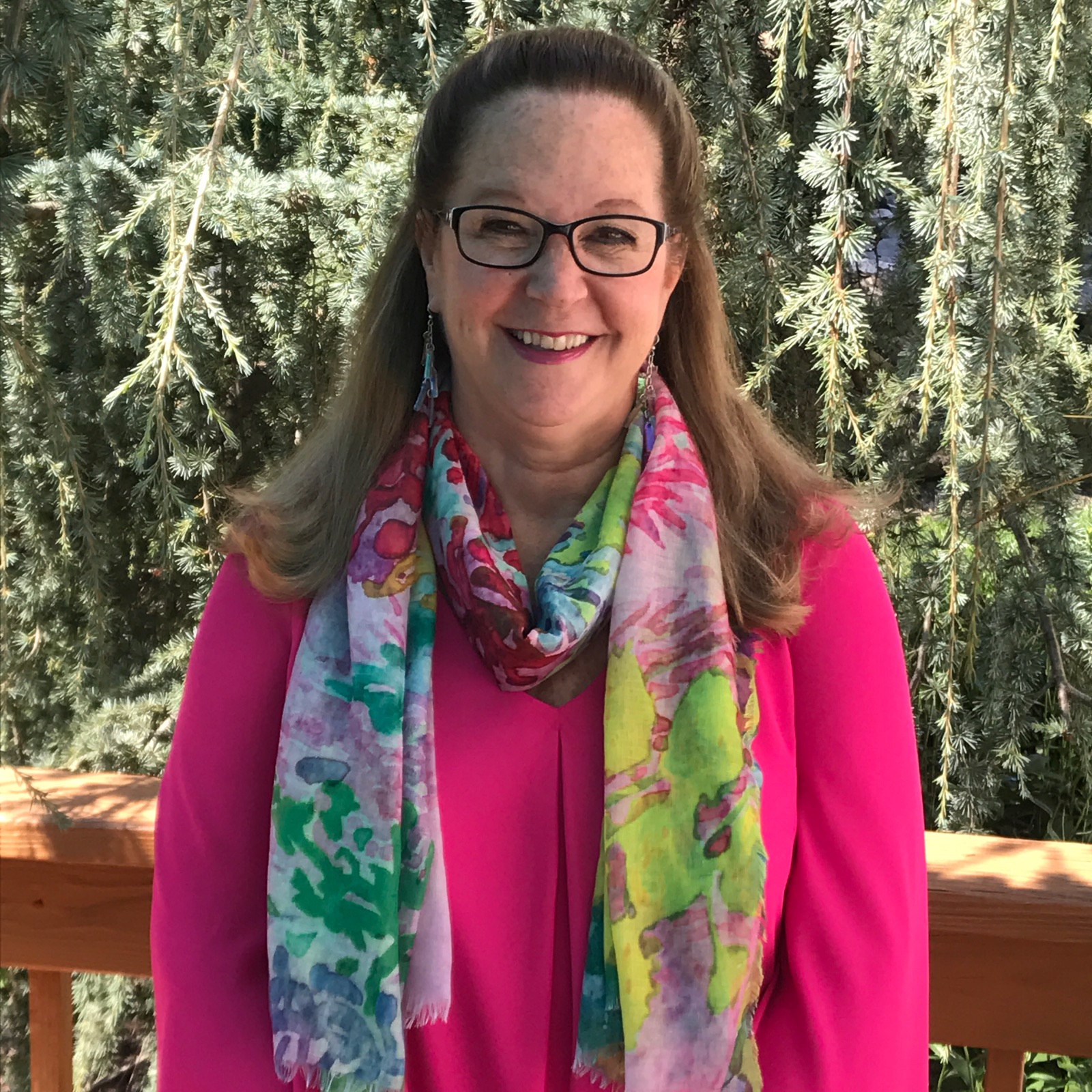
Daneen started working at Homeland in dietary in 1992, switching to the reception desk about five years later. She brings her spontaneous nature to the post, providing a compassionate ear and a sense of calm for families undergoing the difficult transition to nursing-home care for a loved one.

“I explain to them that they did the best thing for their parent or family member because their loved one is getting 24-hour care with specialized and certified assistance,” she says.

Daneen has gotten to know some memorable residents, including one whose aunt modeled for the Beaux-Arts paintings in the Pennsylvania Capitol and the dancing nymphs immortalized in the fountain at Harrisburg’s Italian Lake Park.

Because Homeland is the residents’ home, Daneen does everything she can “to make the residents’ experience as comfortable as possible.”

Though COVID has restricted personal visits, she makes sure family members know someone is at the desk 24/7, “so if they ever feel they want to check in on their loved one, they can do that at any point in time because we have charge nurses and supervising nurses here at all times for their ease.”

Board of Managers member Julie Wilhite finds joy in service and friendship

test
Julie Wilhite

Homeland Center Board of Manager, Julie Wilhite

When Julie Wilhite’s mother arrived at Homeland Center, the family continued a tradition of Wednesday night get-togethers. The first time they were setting up for dinner in the Homeland solarium, a group of residents and their visiting daughters said hello and offered a table.

“I already knew Homeland was a good place, and I knew my mom would be taken care of, but at that point, I thought, ‘These families are so welcoming,’” Julie says.

So, when Homeland approached her about serving on the Board of Managers, Julie’s response was an enthusiastic yes.

Julie always knew about Homeland’s reputation as central Pennsylvania’s premier continuing care retirement community. Her mom’s move to Homeland in December 2018 confirmed that belief, reinforced by Homeland’s active efforts to shield residents from COVID-19 while also keeping them active and engaged.

Though Homeland has had to restrict in-person visits because of the pandemic, every day Julie and her sister, Jan, call their mother and talk about her latest activities. Whether it’s morning devotions with Pastor Dann Caldwell or a socially distanced round of Bingo, Julie and Jan always have plenty to talk about with their mom.

“The activities group has done an incredible job,” she says. “The nursing staff is wonderful.”

Julie joined the Board of Managers in September 2019; she serves on the Nominating and Bylaws Committee and helps plan events. Just before the quarantine, she helped present the lively and colorful sock-hop themed winter party, complete with Elvis Presley impersonator and Homeland staffers wearing poodle skirts.

“It warms your heart to see the smiles on the faces of the residents and how much fun the staff has interacting with them,” she says. “It brings such joy to everyone.”

The Board of Managers is one half of Homeland’s unique dual governance structure. While the Board of Trustees guides policy and financial affairs, the Board of Managers offers the touches that give Homeland its renowned home-like feel.

Volunteering has a special place in Julie’s life. For 31 years, she has volunteered for the Ronald McDonald House, the home-away-from-home for families of patients at Penn State Health Children’s Hospital in Hershey. Julie loves the support that families offer each other and the respite the house provides for families who are, at the end of the day, “exhausted mentally and physically.

She likes that volunteering for Homeland connects her with the other end of the age spectrum. Julie joined the Board of Managers, in part, because she has always believed that the elderly are special people.

“I enjoy engaging in conversation with the residents,” she says. “We become friends.”
Members of the Board of Managers “are very dedicated and hardworking,” she adds. “They want a lot of good things for the residents of Homeland.”

While they can’t enter the building during the quarantine, they have found ways to support residents and staff. They arrange fresh flowers for residents’ rooms, send birthday cards to residents, and provide snacks and write notes of support to staffers.

“We keep positive,” says Julie. “My motto is, ‘Better days ahead.’”

Julie is a retired dental assistant who hasn’t let retirement slow her down. In 2002, she and her husband founded All-American Supply House, a business selling specialty advertising, promotional items and printed apparel. She also was such a good customer of Annabel’s, a Susquehanna Township boutique, that the owner offered her a job. Working there part-time is her “feel-good job.”

“People always feel better when they’re wearing something new and look awesome in it,” she says.
Julie was first married at age 21. Her husband, Kevin Smith, died from cancer in 1995.

“Through faith, family and friends, you get through the hardest times of your life,” she says. “I was blessed to find love again. I married Ted Wilhite 17 years ago.”

Together, they travel to visit his kids, and they entertain.

“Getting together with family and friends is as good as it gets,” Julie believes. And since her mother moved to Homeland and she joined the Board of Managers, her extended family has grown to include Homeland’s residents and their loved ones.

“You become family,” she says. “The family here becomes your family, also. It’s a good thing.”

Homeland Center trustee Keith A. Clark relishes a challenge

test

With a long legal career behind him, Keith Clark has been narrowing his civic causes to those that present new challenges or learning opportunities. The offer to serve on the Homeland Board of Trustees intrigued him.

“Health care is an area with a great deal of moving parts right now,” he says. “This is of interest to me because it offers a new intellectual challenge. I’m also learning about the issue on the side because my mother is in a nursing home. Those two things came together.”

Keith accepted the offer and joined the Homeland Board of Trustees, bringing his considerable experience and methodical mind to the finance and strategic planning committees.

Keith is the chairman of the well-known Harrisburg law firm Shumaker Williams, P.C., where he clerked while earning his Juris Doctorate from Dickinson School of Law. He also served as a first lieutenant in the U.S. Air Force and received his bachelor’s degree in economics from Rutgers College.

Keith dove into community causes and networking “the day I  started practicing law because that’s one way I could get to know people.”

“Harrisburg in the early ‘70s was a pretty closed town, as far as breaking into society,” says Keith, who in 1972 became a shareholder in his firm and its manager. “I had to develop my own path and my own veracity in the community.”

Keith has chaired a variety of significant organizations and initiatives, including Envision Capital Region, Capital Region Economic Development Corporation (CREDC), and the Tri-County Regional Planning Commission.

“I’ve said to young people in my firm over the years that if you’re going to get involved in boards, treat it like a client,” he says. “When you say you’re going to do something, you do it. You do it in a timely fashion and bring your skill set to that board.”

As a board member, he draws on his experience with banking, general business and corporate law, commercial real estate, mergers and acquisitions, trade associations, business planning, governance, and government relations.

That kind of wide-ranging knowledge feeds his need to be “creatively challenged” in the problem-solving realm. His varied dealings stand in contrast to today’s legal environment, where the complexities of specific areas force attorneys to specialize.

“I’m always looking for a new challenge in a new area,” he says. “When the Payment Protection Program came out recently, I determined that one of my associates and I would learn that backward and forwards because it was a new practice area.”

He joined Homeland Center’s board in September 2019, embarking on “a listening process” to learn about the organization, its rich history, and its future. During a meeting in December, he stressed the need to make strategic planning a constant effort, flexible and subject to revision as circumstances change.

“It isn’t a cast-in-stone document anymore,” he says. “It’s something you have to make into a living, breathing document as challenges arise.”

In particular, strategic planning should always consider unintended consequences.

“People want to quickly get to the answer and move on,’’ he says. “But you have to look at how your decisions interact strategically with your plans.’’

Keith’s wife, Linda Clark, is an underwriter for WITF, the Harrisburg-area public media outlet. In fact, that’s how they met. She was his firm’s WITF sales representative, but they’d only communicated by phone until mutual friends brought them together. Married 22 years, they have a son who is in his junior year at the University of Colorado, where he is a biochemistry major.

They enjoy going out to eat, something he rarely got to do as a kid in Reading. They also love attending live theater in New York and locally. COVID-19 curtailed both pursuits, so they’ve been streaming political dramas and catching up on “Masterpiece” series that they missed.

“She likes horror movies,” he says. “I don’t. She can watch those on her own.”

What he has seen of Homeland so far is “really great.” Its leadership is strong. So is its reputation.

“There is a lot of positive feeling about the organization, internally and externally by third parties,’’ he says. “I mention that I’m on the Homeland board, and people recognize the name.”